As Global Head of Idea Management at the Brose Group, I oversaw the suggestion scheme across 23 countries, 57 sites, and approximately 26,000 employees (group total: over 30,000). The result: over 13,000 ideas per year, a first-year net benefit of EUR 25.9M, and participation rates well above the industry average.
These are the 15 questions I hear most often – from CEOs looking to introduce a system, from idea managers wanting to improve theirs, and from leaders trying to understand why their employees’ ideas aren’t flowing. The answers come not from textbooks, but from operational reality.
23
Countries
57
Sites
13,000+
Ideas / Year
EUR 25.9M
First-Year Net Benefit
Award-Winning
German Idea Management Award
The Zentrum Ideenmanagement is the industry association for idea management, CIP, and suggestion schemes in Germany. It annually awards the German Idea Management Award – the most prestigious recognition in the field.
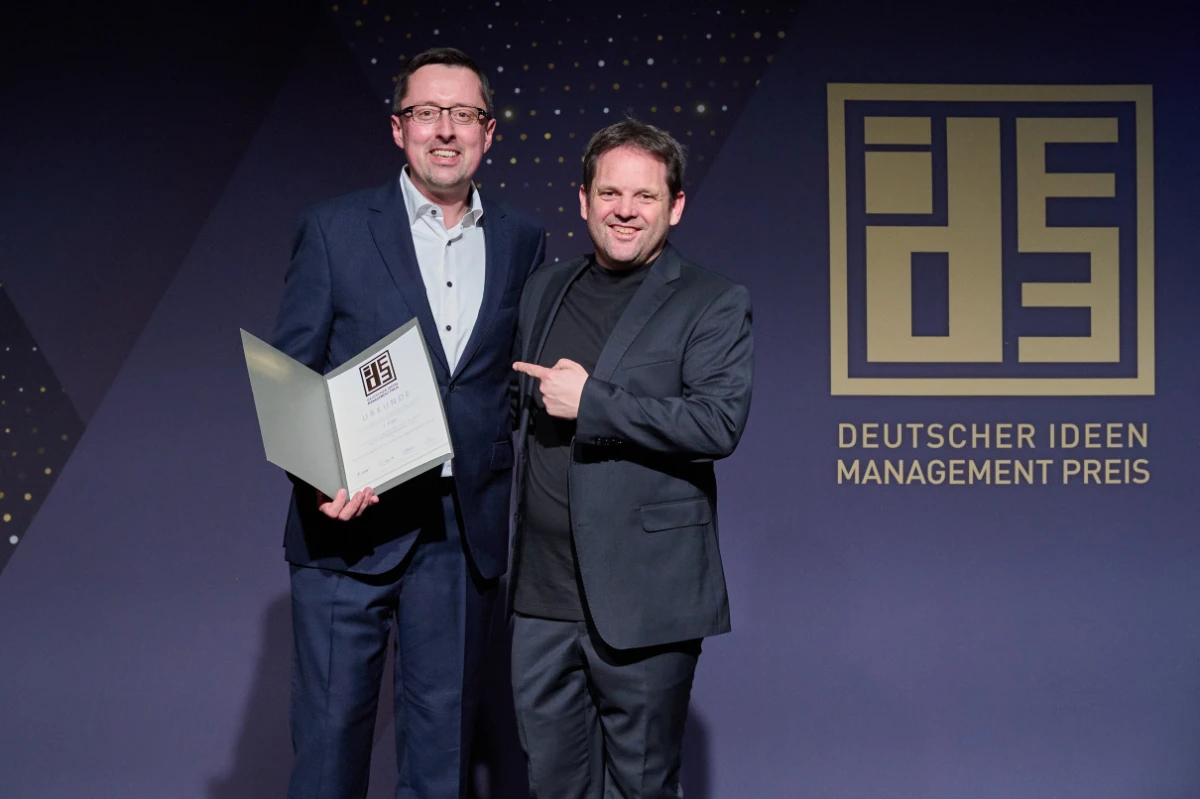
1st Place – Best Idea Management 2024
Brose Group · Awarded by Zentrum Ideenmanagement
3× Gold (2022–2024)
Three consecutive years with Gold rating at the German Idea Management Award
Additional Individual Placements
2021 – 1st Place “Occupational Safety”
2022 – 2nd Place “Apprentice Idea” and “Administration/Services”
2023 – 3rd Place “Safe and Healthy Work Environment”
First awards for Brose in over 10 years. Bernd M. Schell also served as elected board member of the Zentrum Ideenmanagement.
15 Questions & Answers
Frequently Asked Questions About Idea Management
What is idea management – and why isn’t a suggestion box enough?
Idea management is the systematic process of capturing, evaluating, and implementing employee improvement suggestions. It combines the traditional suggestion scheme with continuous improvement processes (CIP/Kaizen). A suggestion box collects ideas – idea management ensures they actually get implemented.
What is the difference between suggestion schemes, CIP, and idea management?
Traditional suggestion schemes focus on individual, formally submitted improvement proposals with a reward system. CIP (Continuous Improvement Process) emphasizes team- and process-driven optimization in daily work. Modern idea management combines both approaches: structured submission and systematic evaluation, integrated with fast, team-based improvements directly at the workplace.
How do you successfully introduce idea management in a company?
Three factors are decisive: First, genuine management commitment – not lip service, but with budget, personnel, and regular attention. Second, a transparent process that provides submitters with feedback within defined timeframes. Third, cultural anchoring – those who submit ideas need to feel it is welcomed. At Brose, we started with pilot sites and gradually rolled out the system to 57 locations worldwide.
Which KPIs matter in idea management?
The three key KPIs: participation rate (how many employees submit ideas), implementation rate (how many ideas are realized), and first-year net benefit (the calculated economic benefit in the first year after implementation). Additional metrics include cycle time, idea rate per 100 employees, and response time. The combination of these KPIs shows whether the system is alive or merely exists.
What is the first-year net benefit – and how is it calculated?
The first-year net benefit is the calculated economic value of an implemented idea in the first year after implementation, minus implementation costs and the reward. It is evaluated by assessors (usually specialist departments) and serves as the central metric for the economic contribution of idea management. At Brose, this value reached EUR 25.9M – validated according to the standards of the Zentrum Ideenmanagement (German Center for Idea Management).
How do you motivate employees to submit ideas?
Rewards are one building block, but not the most important one. The strongest levers: fast, transparent feedback (“Your idea has been reviewed and will be implemented”), visible appreciation from leadership, and tangible changes in the workplace. At Brose, we achieved participation rates well above the industry average through site-specific campaigns, recognition formats, and consistent feedback.
How does idea management work in an international company?
The framework needs to be global; the execution needs to fit locally. At Brose, we established a unified process across 23 countries while allowing cultural freedom – different incentives work in China compared to Brazil or Germany. Key success factors: local idea managers who live the system on-site, combined with global reporting and standardized KPIs.
What role does corporate culture play in idea management?
The decisive one. No process and no software can replace a culture where improvement suggestions are genuinely welcome. It starts with leaders who take their employees’ ideas seriously and don’t interpret them as criticism. Cultural work in idea management means creating space for experimentation, treating mistakes as learning opportunities, and visibly celebrating implementation successes.
Do you need idea management software?
Beyond a certain company size, yes – especially with multiple locations. The software manages the workflow (submission, evaluation, approval, implementation), documents rewards, and delivers reliable KPIs. But more important than the tool is the process behind it. The best software is useless if assessors don’t evaluate, managers don’t approve, or feedback is missing.
How do you measure the ROI of idea management?
The ROI is derived from the ratio of first-year net benefit to the total system costs (personnel, software, rewards, overhead). In a well-functioning idea management system, the factor typically ranges between 3:1 and 10:1. At Brose, the first-year net benefit was EUR 25.9M – system costs were a fraction of that.
What common mistakes should be avoided during implementation?
The five most typical: 1) No genuine management commitment (“Just make it happen”). 2) Cycle times that are too long – anyone who waits months for feedback will never submit again. 3) Focusing on rewards rather than implementation. 4) No clear responsibilities for the assessor role. 5) Overly complex submission forms that deter employees.
How do you get executive buy-in for idea management?
Bernd M. Schell recommends: with numbers and a pilot. Show the calculated benefit from comparable companies, start with a limited pilot area, and deliver solid results after six months. Executives are not interested in the process – they care about the economic contribution and the impact on employee retention and corporate culture.
What does an idea manager do – and what skills are needed?
An idea manager oversees the entire process: initiating campaigns, coordinating assessors, reporting KPIs, and coaching leaders. The most important skills are communication ability, process understanding, persistence, and a good sense for organizational dynamics. It is an interface role between employees, leaders, and executive management.
How does the collaboration with works councils function?
In Germany, works councils have co-determination rights in idea management – particularly regarding reward regulations and company agreements. The approach should be to involve the works council early as a partner, not as an approval authority. When the works council supports the system, employee acceptance increases significantly.
What distinguishes good from bad idea management?
Good idea management is characterized by three things: high implementation rate (not just collecting, but implementing), short cycle times (weeks, not months), and tangible appreciation (every submitter receives feedback). Bad idea management reveals itself when ideas disappear into the system, assessors don’t evaluate, and employees eventually stop submitting.
Looking to introduce or improve idea management?
7 years of global experience, 23 countries, 57 sites – the track record speaks for itself.
ABOUT THE AUTHOR

Bernd M. Schell
Lead Digital & AI at Deutsche Dienstrad · Board Member Zentrum Ideenmanagement · 25 years of building in automotive, aviation and platform business. Global Head of Idea Management at Brose (2017–2024), #1 German Idea Management Award 2024, EUR 25.9M first-year net benefit.
Full profile · LinkedIn · XING